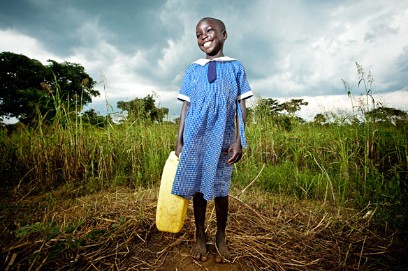
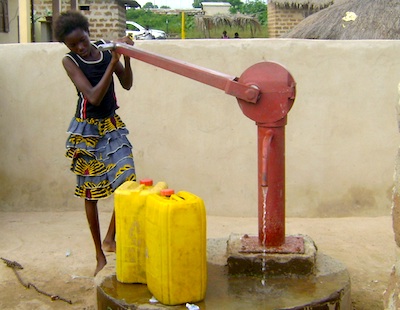
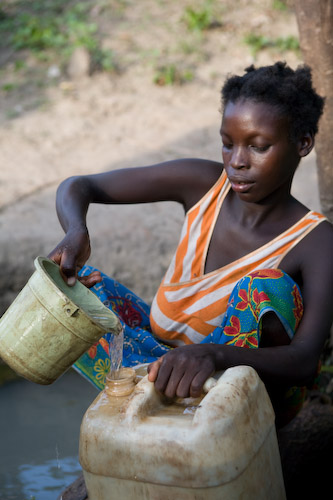
This is Caroline. Beautiful smile, right? She's smiling because she's drinking clean water for the first time. She used to walk three hours every day to fetch dirty water. But not anymore. Her village just got a well. Clean water will change everything for Caroline and her community. For every Caroline, there are millions more children hoping to smile like that. Almost a billion people on the planet don't have clean water right now. Who knows how many people you will impact. This is where it begins. So act now! Did you know?In Africa alone, people spend 40 billion hours every year just walking for water. Women and children usually bear the burden of water collection, walking miles to the nearest source, which is unprotected and likely to make them sick. 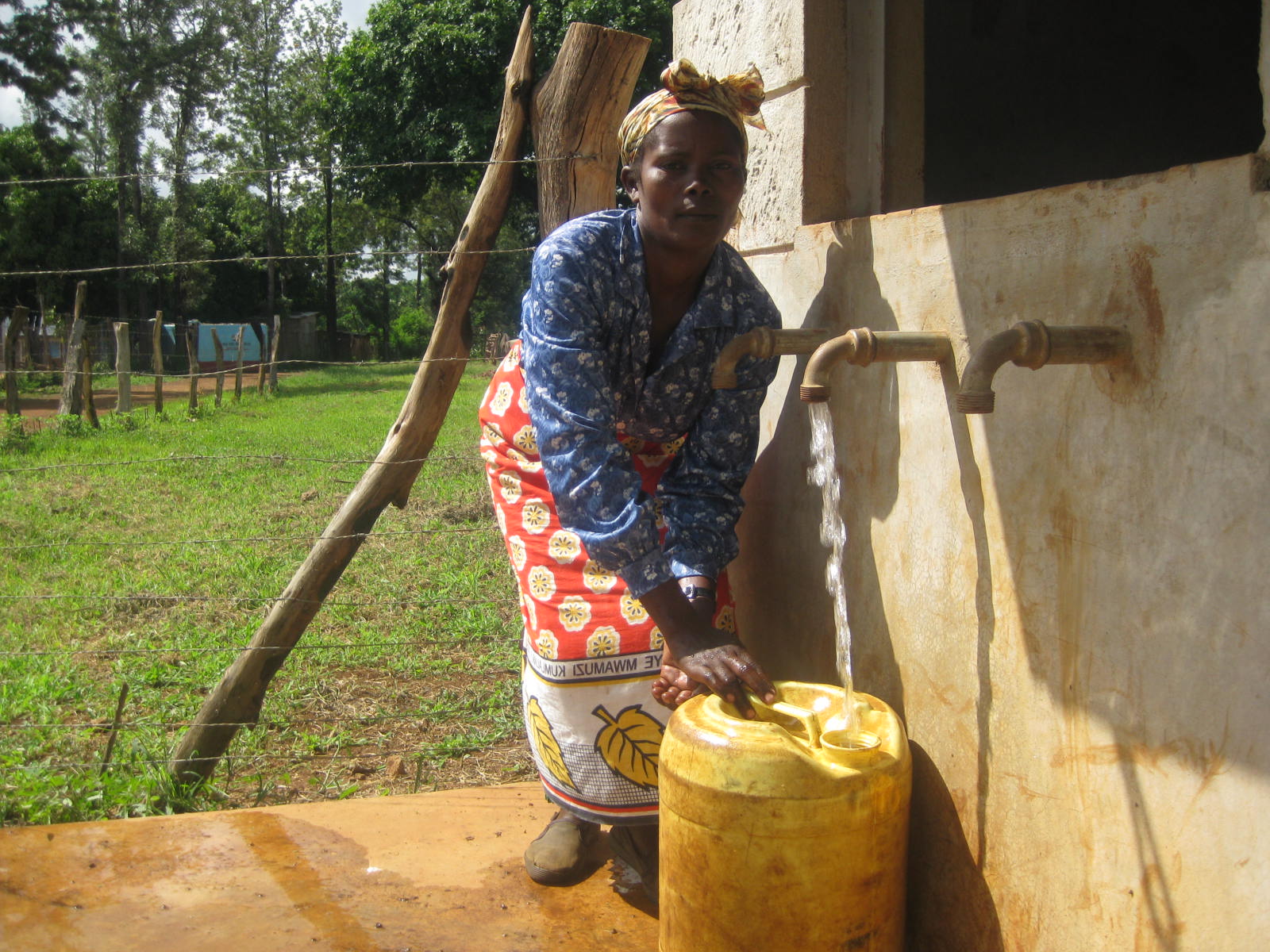 Did you hear?Before this freshwater well was built at the Thunantu Health Clinic in Eastern Province, local people collected water from nearby dirty swamp. Now, the clinic uses safe water onsite and conducts sanitation training for locals (serving an area of 15,000 people) 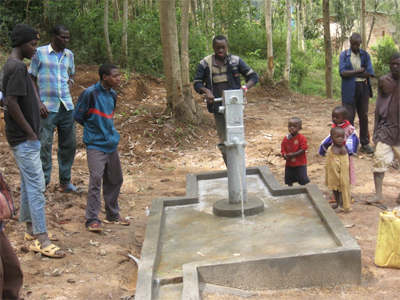 Did you hear?Originally, the Kigarama villagers gathered groundwater contaminated by a nearby pond which caused everything from eye and skin disease to intestinal worms and diarrhea. Villagers were rendered unable to lead healthy, productive lives and when the well team arrived, their excitement was palpable. Tremendous amounts of manual labor cleared the path for the drill rig to tap into clean and safe water 20 meters below the surface, which now serves approximately 1000 Kigarama villagers. 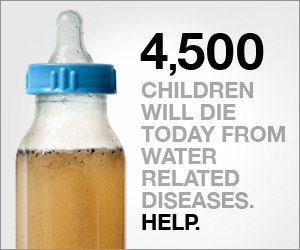
Did you hear?When their water source was broken, women and children had to make multiple trips every day to collect dirty water, often missing work and school. Thanks to the International Rescue Committee, their water pump was fixed, and 300 people received hygiene and sanitation training. More Blog Posts!Some friends from the Tribe Syndication Association blogged about it too, here are some of their posts! |
 DID YOU KNOW?Feeding our world takes up to 90% of our freshwater withdrawals but many people in developing nations still don't have access to enough water for irrigation. When a water project is built in a community, members can often use the new water source to grow small gardens near their homes and secure their own food supply. Self-sufficient households are less affected by external conflict, famine or inadequate government services. Did you hear?Blog Action Day this 2010 was about clean water? Here's some of our favorite posts
|

This free website was made using Yola.
No HTML skills required. Build your website in minutes.
Go to www.yola.com and sign up today!
Make a free website with Yola
